The Connoisseur’s Guide to French Linen: Why Weight, Weave & Slub Matter
Understanding natural flax fibers, moisture breathability, and why true artisanal linen gets softer with every summer wear.
 Field Study · Master Craftsmanship & Natural Linen Cultivation at the AVYR Atelier
- Natural flax fibers wick 20% of their weight in moisture before feeling damp.
- Organic slub variations are the authentic hallmark of artisanal mechanical spinning.
- 140–165 GSM strikes the perfect equilibrium between airy ventilation and sharp silhouette drape.
- Avoid polyester blends: synthetic filaments seal natural fiber pores and cause overheating.
When temperatures climb above 32°C and humidity thickens the air, synthetic fabrics trap moisture, cling to the skin, and degrade rapidly. Pure flax linen, cultivated across Normandy and northern France, possesses a hollow fiber core that naturally wicks moisture away from the torso while promoting continuous air circulation.
The distinguishing mark of genuine artisanal linen is its characteristic 'slub'—the subtle, organic thickness variations along the yarn that reflect traditional mechanical carding rather than sterile chemical homogenization. When you run your hand across an AVYR shirt, that tactile grain tells you the fiber hasn’t been stripped of its natural pectin.
A common misconception is that heavier linen is uncomfortable in peak summer. In truth, an optimal 140–165 GSM (grams per square meter) weight provides the necessary body for a clean drape, preventing the shirt from clinging to your back during alfresco lunches or beachside soirees.
With each wash, the crystalline cellulose in natural flax relaxes, meaning your shirt actually gains softness and character over seasons, rather than wearing out like common fast-fashion cottons.
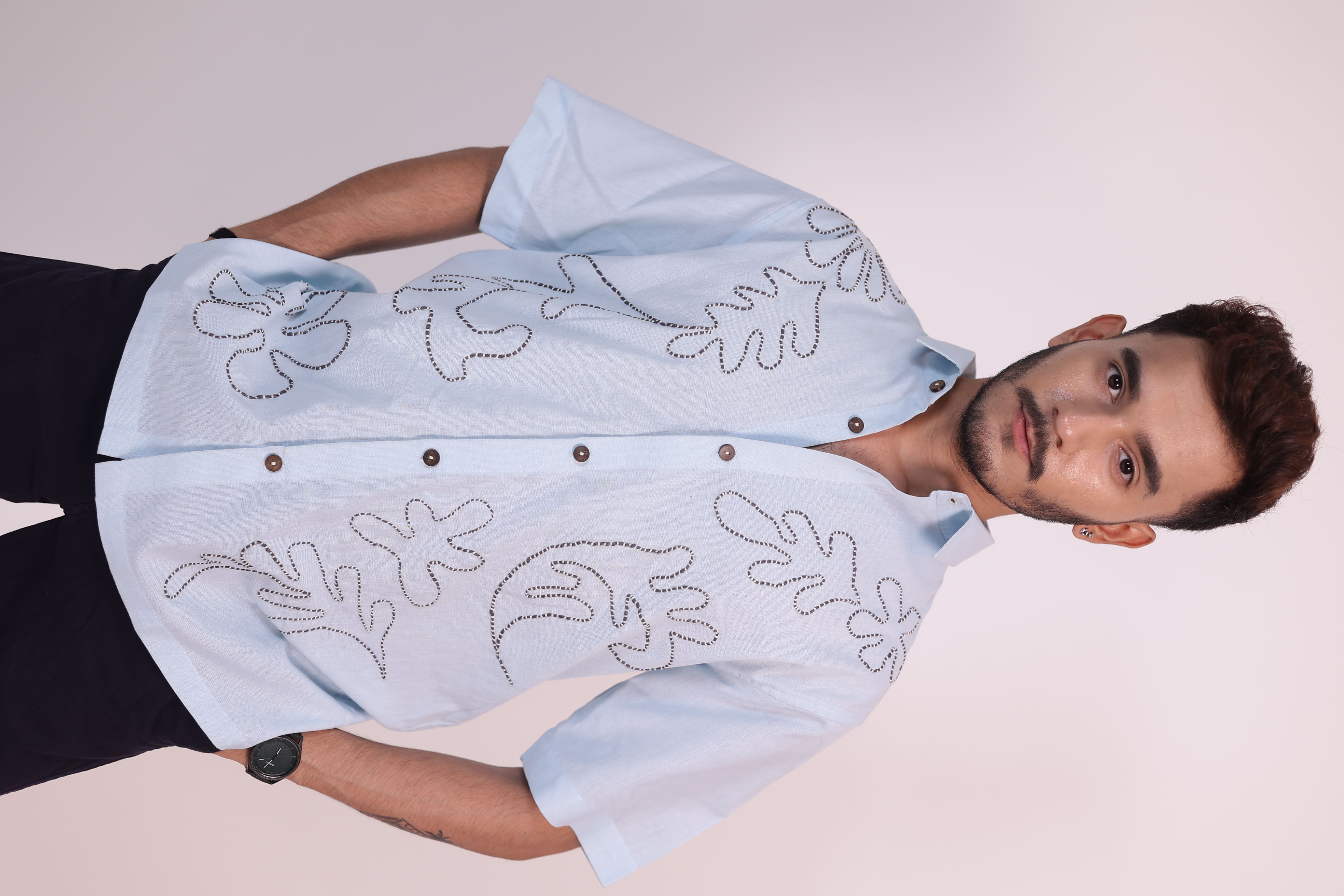
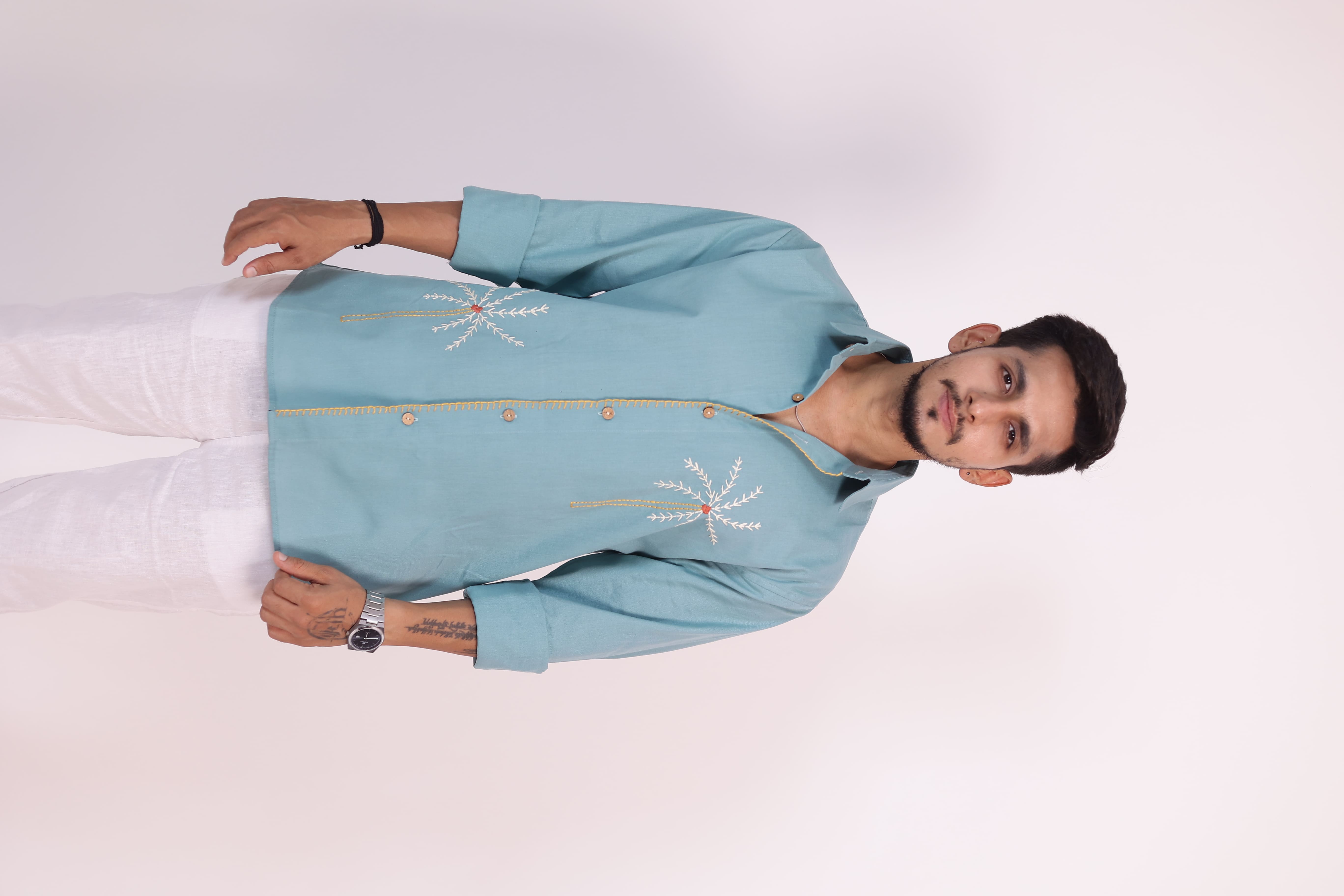
Artisanal Shirts Featured in This Essay
Designed with the exact embroidery techniques and linen weights explored above.
 New
 Bestseller